Selected filters: No Filters Selected
showing 2646 result(s)
Filter(s)-
31 December 2019
Weaning
Information
-
29 March 2022
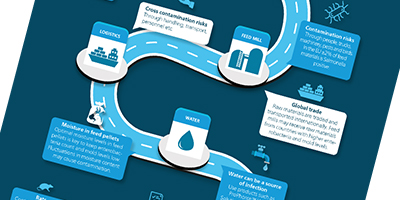
Infographic: don't roll the dice on enterobacteria
Enterobacteria are a major threat to animal production and even food safety. A very versatile threat. Enterobacteria have found ways to enter feed or animal production at pretty much every step of the production chain. There are risks to mitigate and consequences to consider on every turn.
News
Animal Nutrition, Feed hygiene
-
14 March 2022
How clean is your feed?
Feed represents the biggest cost to any livestock production unit; approximately 75% of the total outgoings are spent on feed. As a result, great care and attention is given to the formulation of feeds, ensuring the nutritional requirement of the animal is met with each ration in order to deliver optimal performance levels. Feed is routinely analyzed to check the levels of nutritional components including protein, fiber, vitamins, minerals, moisture, and fats. The analysis results allow adjustments to be made to increase feed intake and reduce undesirable characteristics such as the formation of dust. But how clean is the feed? Are there any contaminants in the feed? When was the last time the feed was analyzed for enterobacteria or mold content for example?
News
Animal Nutrition, Feed hygiene, Mold inhibition
-
12 December 2019
Focusing on feed hygiene and gut health is two steps closer to NAE
To achieve the goal of No Antibiotics Ever (NAE), the industry needs to look at all areas of the production system. Health and nutrition are 2 very important topics to address when the objective is high performing antibiotic free animal production. Our Sofia Rengman zooms in on gut health and feed hygiene as 2 key drivers to help reduce the need for antibiotics and help enable NAE (No Antibiotics Ever) production.
News
Animal Nutrition, Feed hygiene, Gut health
-

29 October 2020
Poultry gut health solutions
The poultry production cycle is faced with many potential challenges. Optimized production will focus on optimized gut integrity and protecting your flocks from pathogenic infections. Strategically implementing our solutions for poultry can help you to improve your results and animal performance, and protect the wellbeing of your chickens.
Information
Animal Nutrition, Gut health
-
01 December 2018
Perstorp sees threat of antibiotic resistance
One of the greatest threats to our health in 2048? Probably antibiotic resistance. In 2048, antibiotic resistance could cause more casualties than cancer. More than enough reason for Perstorp to further invest in organic acid-based solutions and especially solutions based on the esters of organic acids, an area where Perstorp has seen incredible potential.
News
-

17 November 2020
Swine performance & gut health
In animal protein production, everything is about performance.
Information
Animal Nutrition, Gut health
-
31 July 2019
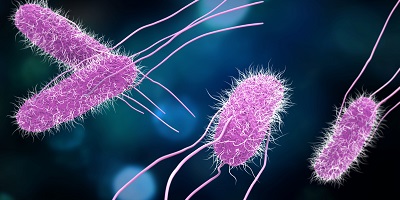
Salmonellosis in quantify July
In quantify July we’d like to highlight different numbers and figures in different ways. So far we have talked about the estimated benefits of good silage practices and facts and figures about the industry we are working in.
News
Animal Nutrition
-
13 May 2022
The importance of Feed Hygiene in Zinc Oxide reduction
Pharmacological doses of ZnO were commonly added to piglet diets to support gut health and reduce the incidence of PWD, reducing mortality rates and the long-term improved performance of the animal. However, that option is no longer available to pig producers.
News
-
09 June 2022
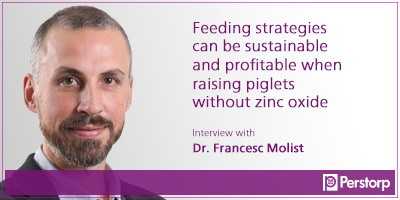
Feeding strategies can be sustainable and profitable when raising piglets without zinc oxide
Interview with Dr. Francesc Molist Weaning is an important but highly stressful time for piglets. Several stressors put huge pressure on their digestive and immune systems making piglets vulnerable to diseases, like post-weaning diarrhea (PWD). Zinc oxide (ZnO) has been successfully used as a cost-effective solution of mitigating PWD for many years. But in 2017, the European Commission supported a decision by the European Medicines Agency to move away from using pharmacological doses of ZnO in piglets’ feeds. Because the benefit of using ZnO does not outweigh the negative environmental impact and the associated risk of increasing antimicrobial resistance bacteria. This new context demands for alternative solutions to prevent PWD and maintain the piglet’s health status during weaning. A multifaceted approach needs to be taken which incorporates biosecurity, health care, management, and nutrition. Join us in this interview with DVM, PhD, BBS Francesc Molist, Research & Development manager at Schothorst Feed Research (Netherlands) where we discuss new nutritional approaches when feeding piglets after the ZnO ban and give useful advice for pig producers to maintain a sustainable and profitable production during these new times.
News
Pattern Lab